

Table of Contents
- Why Standard Sizes Fail Real Bodies
- How to Measure for Lingerie at Home
- Best Lingerie Styles for Hourglass Figures
- Lingerie Fit for Pear, Apple, Rectangle, and Inverted Triangle Shapes
- How to Stop Shapewear Rolling Down
- Fabric, Budget, and Inclusivity: What Most Guides Skip
- Frequently Asked Questions
Last Updated: September 11, 2026
Why Standard Sizes Fail Real Bodies
Lingerie that fits real body types starts with one uncomfortable truth: a single size chart cannot account for the millions of shape variations among people who wear the same band and cup. Mass-market sizing was built around narrow proportions, so a 34C on one person sits nothing like a 34C on another.
The result: straps dig in, bands ride up, and cups gap or spill, because the garment was cut for an average that does not exist.
CDC National Health Statistics Report on body measurements has documented how widely adult body proportions vary within the same nominal clothing size. That variation is exactly why a fit guide matters more than a size label.
At Saratily, we build intimate apparel around how a body actually moves and measures, not a hypothetical standard. Below: how to measure yourself at home, which silhouettes flatter each shape, and how to stop shapewear from rolling down.
How to Measure for Lingerie at Home
Learning how to measure for lingerie at home takes about ten minutes and a soft tape measure. Wear a non-padded bra or none, stand relaxed, and keep the tape snug but not tight.
Measure over the fullest part of the bust for your bust number, and directly under the bust for your band number. For the waist, find the narrowest point above your navel; for hips, the fullest point of your seat. Write all four numbers down before you shop.
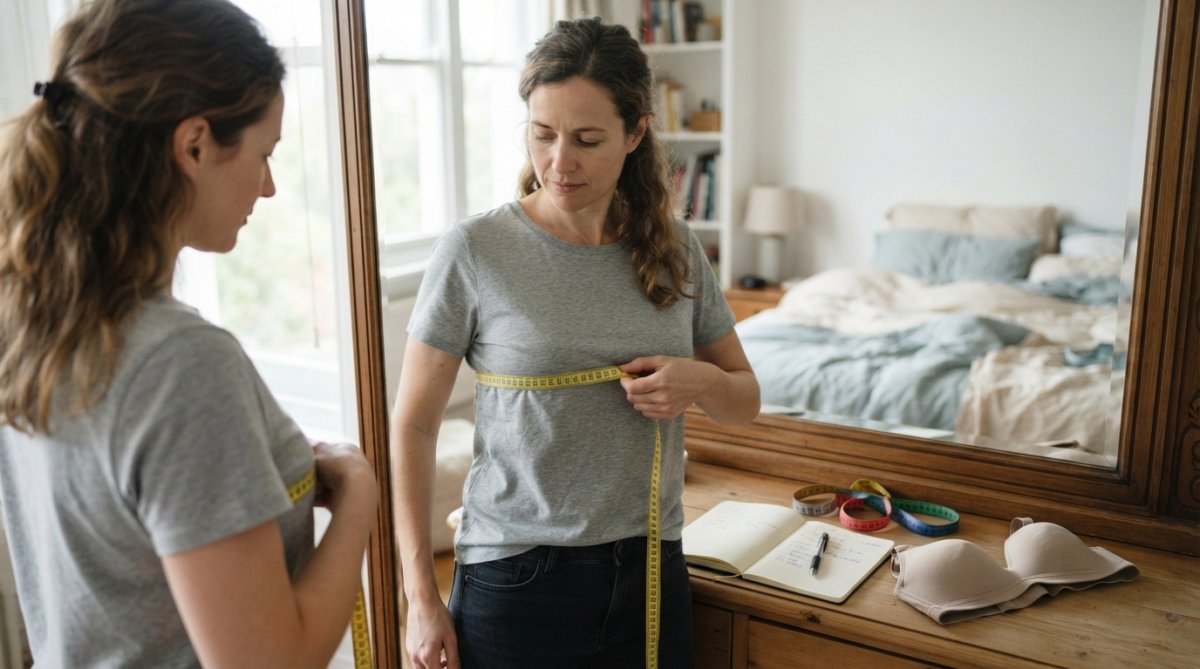
Band, Bust, Waist, and Hip: The Four Numbers That Matter
Band size sets the foundation: if the band is wrong, nothing above it sits correctly, the most common fit failure. Bust minus band gives you cup size.
Waist and hip numbers tell you which rise and cut will sit flat instead of digging or gapping. A high-waisted piece, for example, needs your true waist measurement to stay put.
A Visual Fit-Check Before You Buy
Before buying, run a quick visual check. The band should sit level and stay put when you raise your arms. Straps should hold without leaving deep marks. Cups should lie flat against the breastbone with no gaping.
If a piece fails any of these checks, size or style is wrong, not your body, the mindset shift that makes lingerie that fits real body types achievable.
| Check | What Good Looks Like | Fix If It Fails |
|---|---|---|
| Band | Level, stays put | Size down a band |
| Straps | Hold without digging | Adjust or switch style |
| Cups | Flat, no gaping | Change cup or cut |
| Waistband | Sits flat, no roll | Try high-waisted cut |
Best Lingerie Styles for Hourglass Figures
The best lingerie styles for hourglass figures follow the body's natural balance rather than fighting it. An hourglass shape has a defined waist with bust and hips that measure close to each other, so highlight the waist without adding bulk elsewhere.
A well-fitted balconette or underwire bra supports the bust and keeps the waistline visible. High-waisted bottoms and garter belts trace the hip line and emphasize the waist-to-hip ratio. A bodysuit or waspie cinches gently at the middle while staying smooth under clothing.
Avoid heavily padded cups or boxy cuts, which flatten the natural curve. For hourglass figures, definition beats coverage.
Lingerie Fit for Pear, Apple, Rectangle, and Inverted Triangle Shapes
Each shape needs a different strategy, and matching the silhouette to the shape separates a piece you wear once from one you reach for weekly. Specificity matters: not just "add volume up top," but which cut, which rise, and which measurement drives the decision.
Start with the ratios between your bust, waist, and hip numbers from the measuring section above. Most fit specialists work from three, bust-to-waist, hip-to-waist, and bust-to-hip, rather than a single label. Write them down before you shop; they tell you more than any size chart.
Pear Shape: Balance the Hip Line
Pear shapes carry more volume through the hips and thighs with a narrower bust. Draw attention upward and balance the hip line without flattening the bottom.
- Bra: A balconette or demi-cup with light padding adds visual weight to the top half. A bralette with lace detailing works for smaller busts; a wire-free bra with a wide band works better once the bust passes a C cup.
- Bottoms: A mid-rise brief that sits on the hip bone, not below it, keeps the hip line smooth. Dark, matte fabrics minimize; high-shine satin and lace panels add volume where you may not want it.
- One-piece: A chemise that skims rather than clings keeps the silhouette even. Look for a side slit or a wrap front, both break the vertical line and stop the eye from reading the hip as the widest point.
A common pattern: pear shapes size up in bottoms to fit the hip, then find the waistband gaps. The fix is a higher rise and a wider waistband, not a smaller size.
Apple Shape: Define the Waist
Apple shapes carry volume through the midsection with a fuller bust. Waist definition is the priority, but the mechanism matters: you are creating a visual waistline, not compressing the midsection.
- Bra: An underwire bra that lifts and separates creates a waistline where the eye expects one. A plunge or full-coverage cut both work; the key is that the underwire sits flat against the ribcage, not on breast tissue.
- Bottoms: A high-waisted shaping panty that reaches the natural waist smooths without rolling. Look for a wide, silicone-lined waistband, narrow elastic bands are the number-one cause of roll-down on apple shapes.
- One-piece: Empire-waist chemises and teddy styles that flare below the bust define the waist without squeezing it. Avoid corset-style pieces with rigid boning unless they are cut specifically for a shorter torso.
Rectangle Shape: Create Curves
Rectangle shapes have a straighter waist-to-hip line, so create the illusion of curves rather than revealing them.

- Bra: A push-up or balconette adds bust projection, which widens the visual difference between bust and waist.
- Bottoms: Hip detailing, ruching, lace panels, side ties, adds shape at the hip. A high-cut leg opening lengthens the leg line.
- One-piece: A bodysuit with a defined waist seam or a waspie-style cincher creates a waist where the body does not have one. Ruching along the side seams is the single most effective detail for rectangle shapes.
Inverted Triangle Shape: Soften Shoulders, Add Volume Below
Inverted triangle shapes have broader shoulders with narrower hips, the mirror image of the pear shape.
- Bra: A simple, unstructured bralette or a soft-cup bra keeps the top half visually quiet. Avoid heavily padded cups and wide-set straps, which widen the shoulder line.
- Bottoms: Ruffled, lace-trimmed, or high-waisted bottoms add volume below. Boy-short cuts with a wide waistband also work because they build a horizontal line at the hip.
- One-piece: A teddy or bodysuit with a deep V-neckline draws the eye down and inward, which balances the shoulder width.
A Quick Fit-Check Per Shape
Before you commit to a piece, run the same three checks regardless of shape:
| Check | What Good Looks Like | Fix If It Fails |
|---|---|---|
| Band | Level, stays put when you raise your arms | Size down a band |
| Straps | Hold without digging or slipping | Adjust or switch to a wider strap |
| Waistband | Sits flat, no roll, no gap | Try a higher rise or a wider band |
| Cups | Flat against the breastbone, no gaping or spill | Change cup size or cut |
If a piece fails any of these, the size or the cut is wrong, not your body. That is the mindset shift that makes lingerie that fits real body types achievable.
How to Stop Shapewear Rolling Down
Knowing how to stop shapewear rolling down comes down to three things: the right size, the right rise, and the right fabric. A waistband rolls when it is too loose, sits too low, or the fabric has lost its stretch.
Size to your true waist, not a smaller size. A high-waisted shaping panty that reaches the natural waist has more surface to grip and rolls far less than a low-rise option. Look for a wide, silicone-lined waistband that holds without digging.
Smooth the garment upward in small sections rather than yanking it on. If a correctly sized piece still rolls, the fabric has stretched out, replace it.
Fabric, Budget, and Inclusivity: What Most Guides Skip
Fit is only part of the picture. Fabric, price, and inclusivity decide whether a piece actually works for your life, and most guides skip all three.
Sustainable and Ethical Fabric Considerations
Fabric choice is a fit issue, not just an environmental one. A fiber that breathes keeps the band from sliding on a warm day; one that loses stretch turns a well-fitting waistband into a roll-down problem within months.
- Natural fibers: Cotton, modal, and bamboo breathe better against skin than synthetic blends. Cotton is the most durable of the three for everyday wear; modal and bamboo drape more softly and are common in chemises and teddies.
- Recycled synthetics: Recycled nylon and recycled polyester reduce environmental impact while keeping the stretch that lace and shaping pieces need. They are the practical choice for anything that has to hold its shape.
- Certifications to look for: OEKO-TEX Standard 100 verifies that a finished textile has been tested for harmful substances (oeko-tex.com). GOTS certifies organic cotton from farm to finished product. Fair Trade Certified indicates verified labor standards. If a brand claims "eco" without one of these or a comparable third-party mark, treat it as marketing.
- Care trade-off: Natural fibers usually need cooler washing and air drying to keep their shape. Synthetics tolerate more heat but shed microplastics. Neither is free, pick the trade-off that matches how you actually do laundry.
Budget-Friendly vs. Investment Pieces
Not every piece needs to be an investment. Spend where the piece has to hold structure; save where it only has to look good.
- Spend on: Bras (the underwire and band do the structural work), high-waisted shaping pieces (the waistband is the whole product), and anything you wear weekly.
- Save on: Trend-driven colors, occasion-only pieces, and anything you expect to replace within a season.
A capsule approach beats buying piece by piece. A workable starting set for most body types: three bras (everyday, strapless or convertible, soft-cup), two to three bottoms in different rises, and one shaping piece, roughly six to seven items covering most outfits in a week.
Saratily's Comfort Lift Bra at $29.90 and High-Waist Butt Lifter Shaping Panty at $17.00 sit in that everyday tier, while the High Waist Shapewear Tummy Control Panties at $19.00 handle smoothing for special occasions.


| Piece | Price | Best For |
|---|---|---|
| Comfort Lift Bra | $29.90 | Everyday wire-free support |
| Butt Lifter Shaping Panty | $17.00 | Daily shaping and lift |
| Tummy Control Panties | $19.00 | Special-occasion smoothing |
| Breast Lifting Tape | $16.95 | Strapless, backless outfits |
Transgender and Non-Binary Inclusive Fit Notes
Standard sizing often ignores bodies that do not match traditional proportions. Shop by measurement and silhouette goal, not by the gender label on the tag.
- Broader chest, narrower hips: A wire-free bra with a wide band and adjustable straps offers support without relying on cup volume alone. A bralette with a wide underband distributes pressure across the ribcage instead of concentrating it at the straps.
- Smoother chest line: A high-waisted shaping piece or a compression-style top can create a flatter silhouette without restrictive binding. Look for pieces with a wide, flat-locked seam, narrow elastic edges are what cause discomfort and skin irritation.
- Strapless or deep-cut looks: Breast lifting tape offers a flexible, wire-free option. Test on a small area of skin first, and remove slowly with warm water or oil rather than pulling.
- Sizing reality: Many shoppers in this category end up between two standard sizes. When that happens, size to the larger measurement for bands and the smaller for cups, then adjust with strap tension. The right approach is the one that fits your body, not a label.
GLAAD media reference guide on inclusive language offers useful context on writing and speaking about gender-diverse shoppers respectfully.
Frequently Asked Questions
How do I accurately measure my body for lingerie?
Use a soft measuring tape and measure four key points: band size (snug under your bust, rounding to the nearest even number), bust (around the fullest part, parallel to the floor), natural waist (at your belly button), and hips (at the fullest point). Wear a non-padded bra or go braless. Write the numbers down in inches and compare them to each brand's size chart, since lingerie fit varies by manufacturer. Re-measure every six months or after any weight change for the most accurate fit.
How can I tell if a lingerie piece will provide a comfortable fit?
Check three things: the band should sit snug but allow two fingers underneath, the cups should lie flat without gaping or digging, and any elastic trim should not leave red marks after 30 minutes. Look for adjustable straps, hook-and-eye closures with at least three columns, and breathable fabrics like cotton or modal blends. If you are between sizes, size up in the band and down in the cup for a closer fit. Saratily's Comfort Lift Bra ($29.90) is wire-free and designed for all-day wearability.
What are the best lingerie styles for different body shapes?
Hourglass figures look balanced in high-waisted bottoms and balconette bras that follow natural curves. Pear shapes benefit from chemises or babydolls that skim the hip line and bralettes that add volume up top. Apple shapes get waist definition from waspies or high-waist shaping panties. Rectangle shapes can create curves with garter belts and padded bralettes, while inverted triangles look best in styles that soften the shoulder line, like V-neck teddies. The right lingerie fit depends on your measurements, not the label.
Why do sizing standards vary so much between lingerie brands?
There is no universal sizing standard for intimate apparel in the United States. Each brand drafts its own fit model, which means a medium in one line can match a small in another. Factors include target customer body types, fabric stretch, and whether the brand uses US, UK, or European sizing. Always check the specific brand's size chart and customer reviews before ordering. If you are between sizes, choose the larger size for comfort, especially in non-stretch fabrics like lace.
Finding lingerie that fits real body types is less about chasing a perfect size and more about understanding your own measurements, shape, and comfort needs. Saratily builds pieces around that reality, from the wire-free Comfort Lift Bra to customizable high-waisted shaping and non-piercing magnetic jewelry for painless self-expression. Explore the collection and find intimate apparel crafted to reveal with intention.